
 Ventura Tours Central Asia
 A yurt, the traditional home of the Kyrgyz
The round felt dwelling of the nomads is still part of life in Kyrgyzstan: it shelters shepherds on the summer pastures, appears in city courtyards for holidays and welcomes travellers at yurt camps. Here is how a Kyrgyz yurt is built, what its parts are called, and the numbers behind it.
A dwelling of the nomadic world
Yurts were central to nomadic peoples across Central Asia, Russian Siberia, Mongolia and other Indo-European lands. In Kyrgyzstan the yurt is more than a building: it stands for heritage and home, and it still stirs something in every Kyrgyz heart.
Most people in the country today live a modern life in flats, apartments and private houses, yet the yurt has kept a firm place in modern Kyrgyzstan — on the pasture, at celebrations and increasingly in the travel experience.
Where you meet yurts today
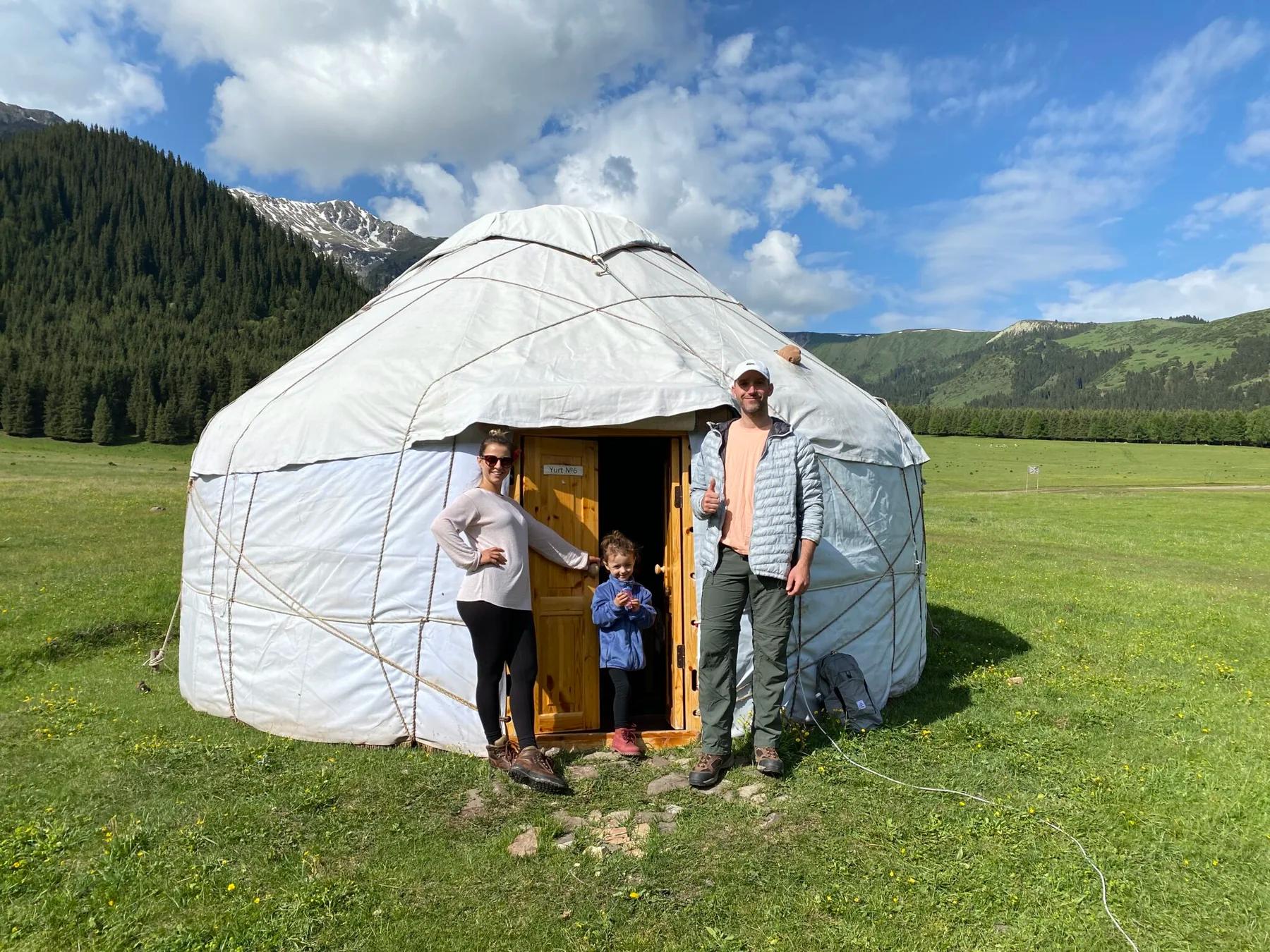
High in the mountains, on the summer pastures known as jailoo, the yurt is essential property for every shepherd and farmer and their families. Because it is portable, it serves as their house through the months of cattle grazing.
In towns and in the capital, yurts are set up in courtyards and streets for national holidays such as Nooruz and Independence Day, for family celebrations and for funerals. Yurt camps have also grown popular with travellers looking for an authentic stay: overnight options exist in remote valleys and in places such as Son Kol lake, Bokonbaevo village and Jeti Oguz valley.
How a yurt holds together
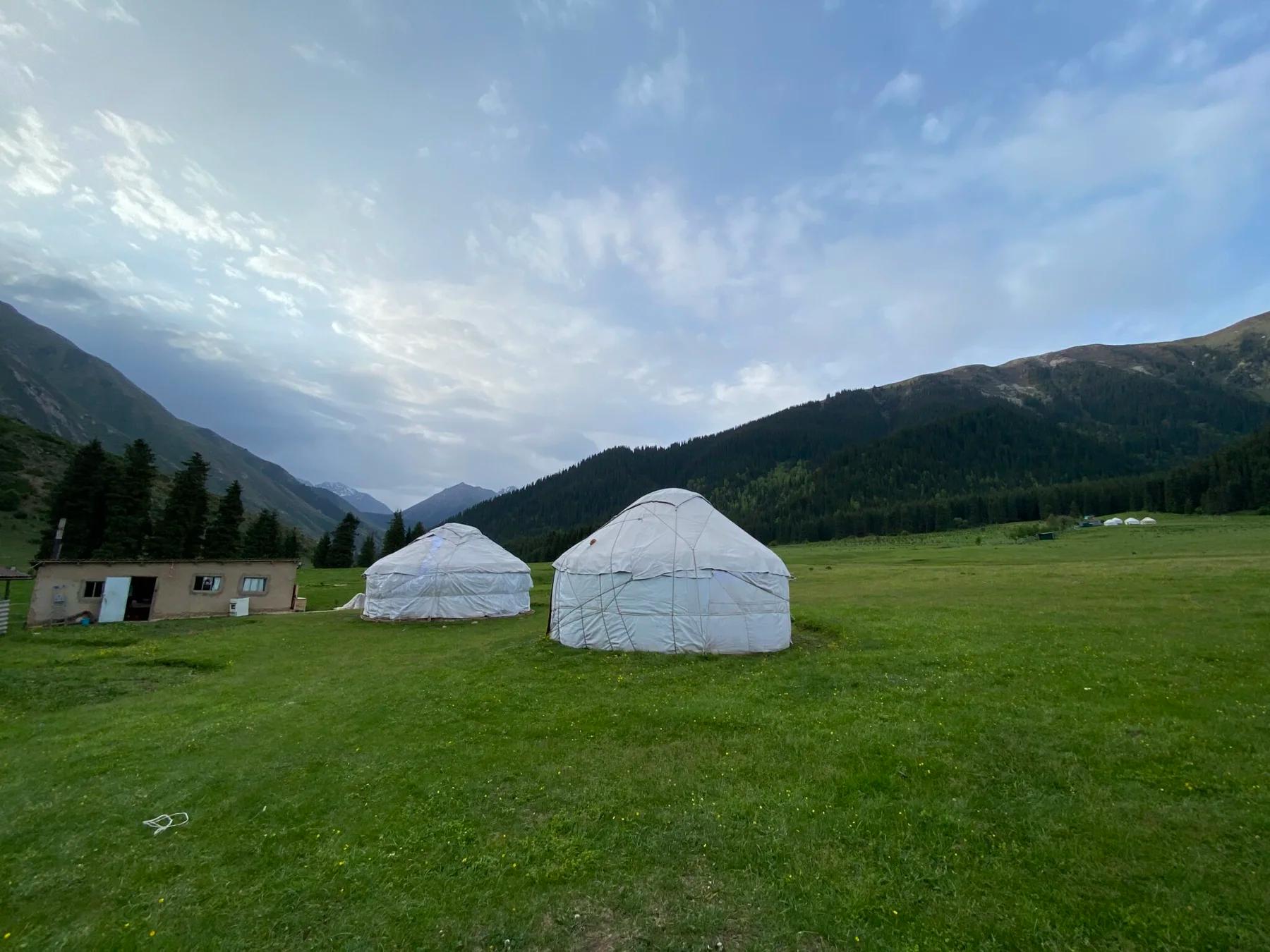
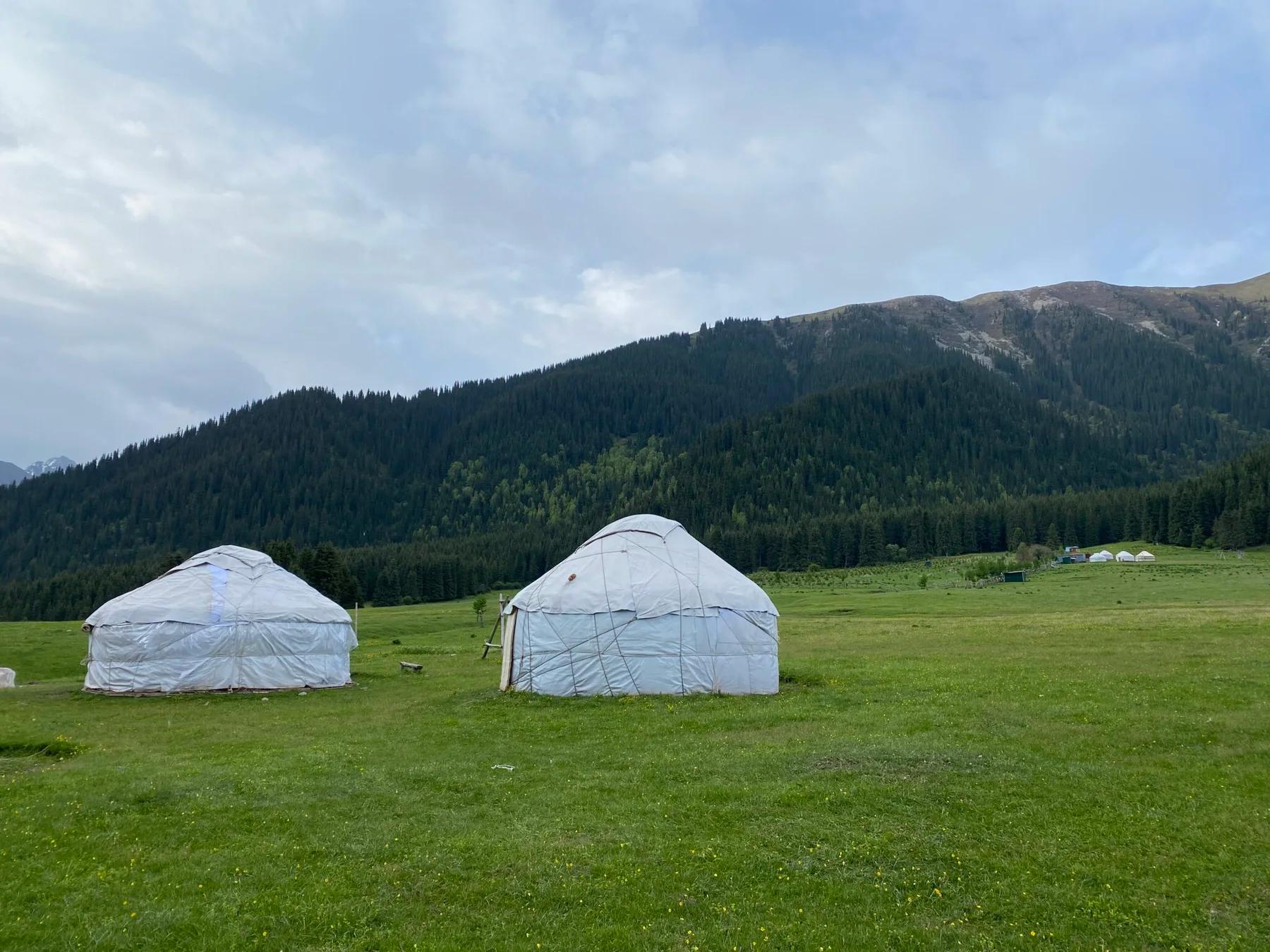
A yurt is remarkably tough: the structure stands up to fierce winds and to earthquakes. An average Kyrgyz yurt of six sections (alty kanat) measures about 6 m across, covers 30 m² and stands 3 m high, with a tunduk — the crown ring — 2 m in diameter.
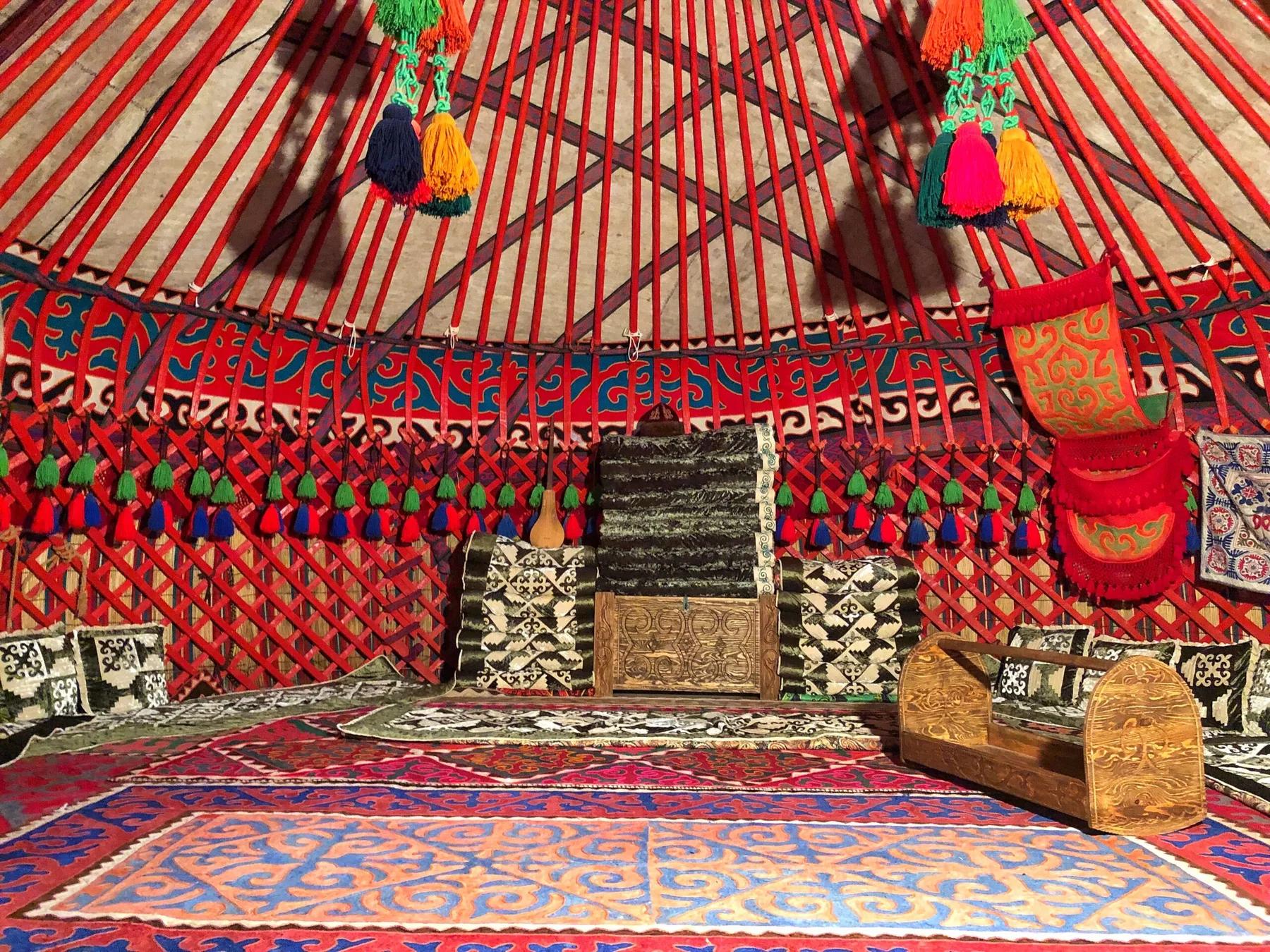
Every part has its own name. The tunduk fixes the dome and serves as roof, skylight and chimney. The uuk are the curved wooden poles of the dome; the kerege is the wooden lattice that forms the walls; kanat chiy is the straw matting laid over that framework. Felt covers the walls (tuurduk) and the dome (uzuk), and an ornamented felt strip, jabyk bash, runs around the yurt. The kyrchoo rope girds the whole structure. The entrance is framed in wood (bosogo) with a felt canopy, eshik, that can be unrolled over the door.
The tunduk: a ring on the flag
The tunduk is the symbol of hearth and home, and it is depicted on the national flag of Kyrgyzstan, where it stands for the sun with 40 rays — a reference to the country's history as the land of 40 tribes.
Numbers behind the felt house
Felt for one yurt takes the fleece of about 25 sheep. Under nomadic conditions a yurt lasts on average 25 years, and a craftsman needs some 25 days to make its wooden frame. A finished yurt weighs around 400 kg.
Two or three people can put a yurt up in about an hour; taking it down is harder and usually takes around two hours. The whole structure can be carried on two horses. In 2014, at the World Nomad Games, the Kyrgyz team set a record by assembling a yurt in 17 minutes.
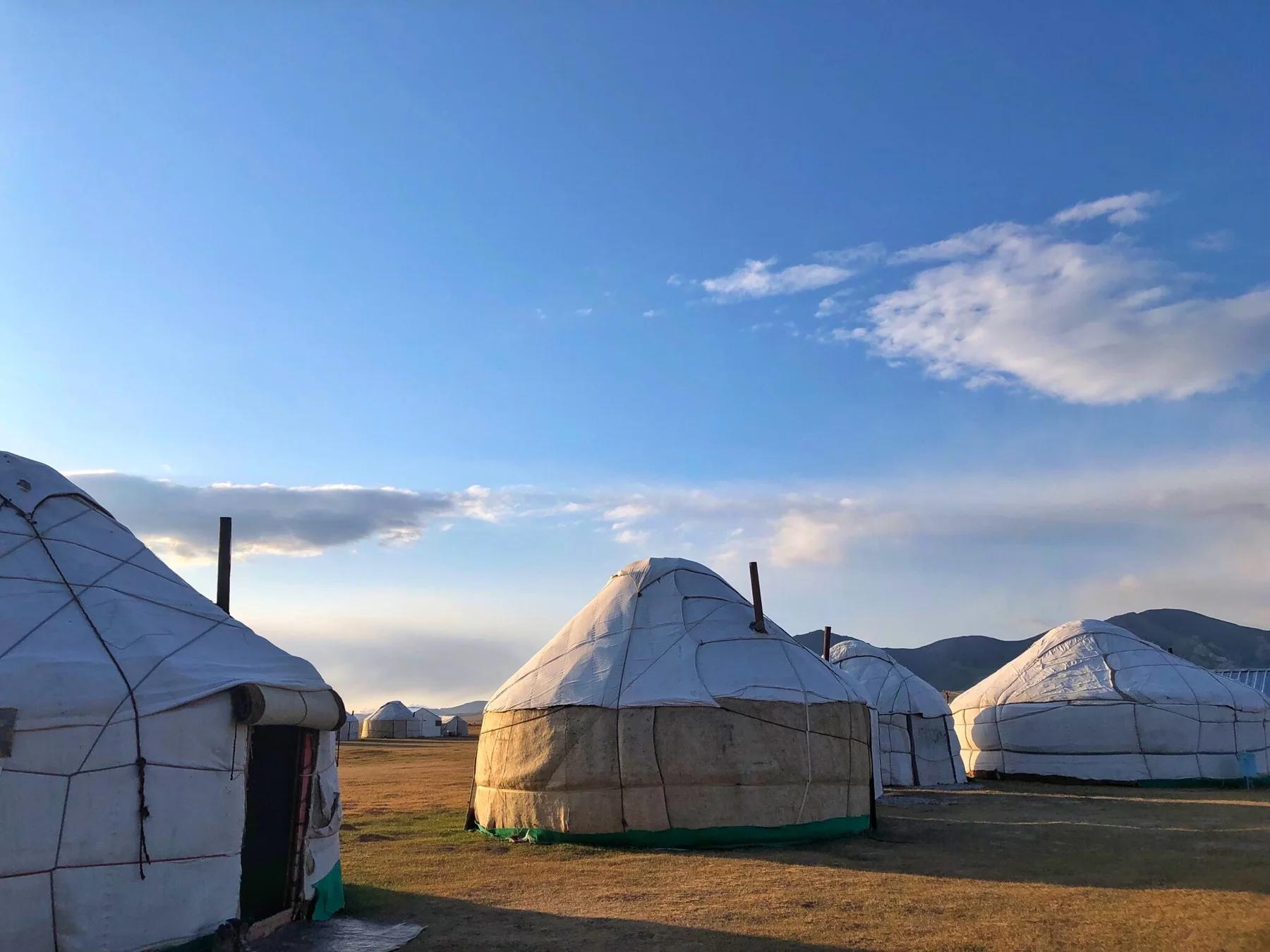
See a yurt go up
Yurt assembly demonstrations are held for visitors in Kyrgyzstan, so a traveller can not only watch the process but also take part in it. It is one of the simplest ways to touch the nomadic side of the country.
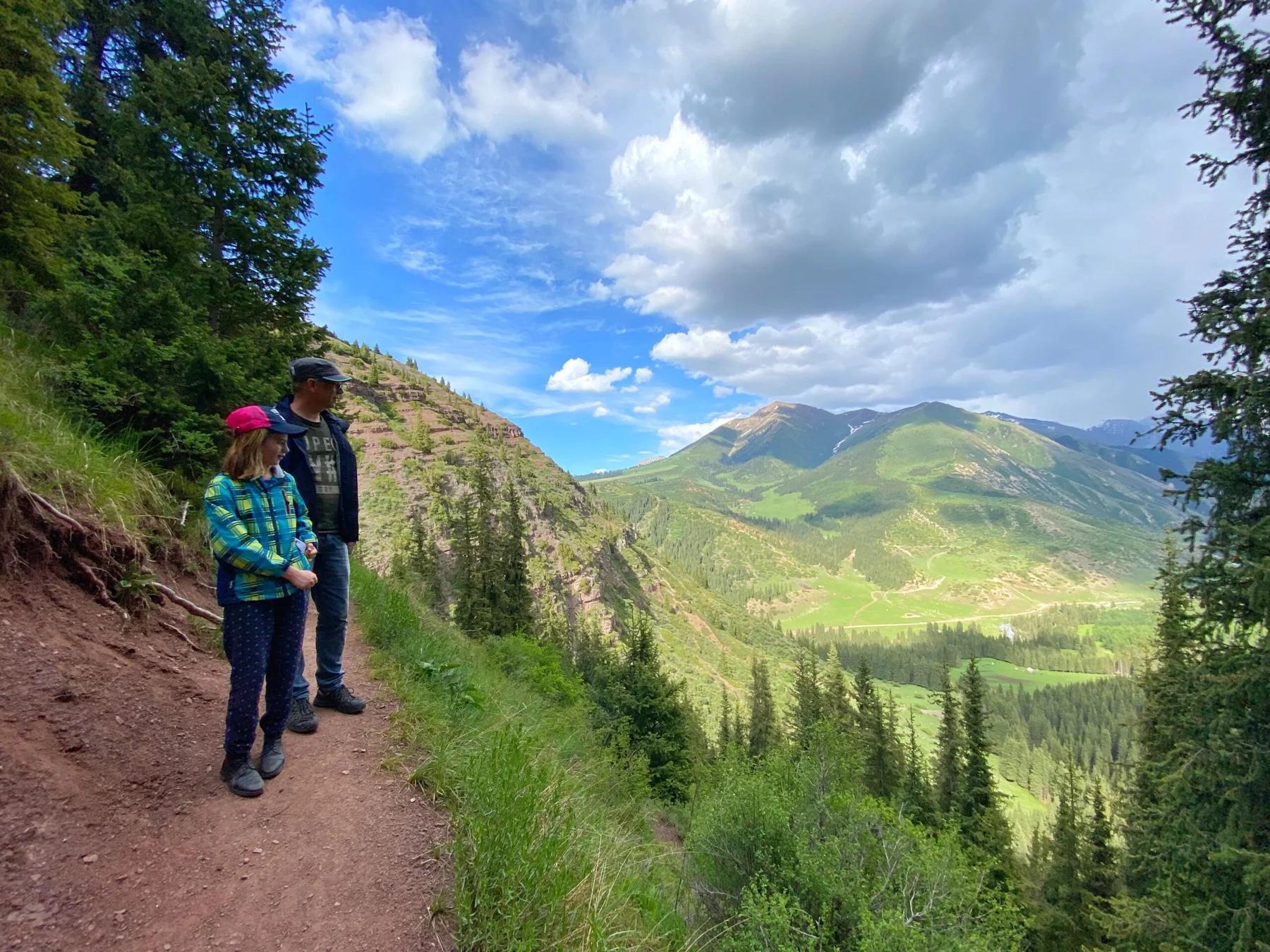
Five reasons to visit Kyrgyzstan
Mountains and lakes in four seasons, nomadic traditions you can join, horse games and falconry, the places travellers ask about first, and the question of when to come: what actually draws people to Kyrgyzstan.
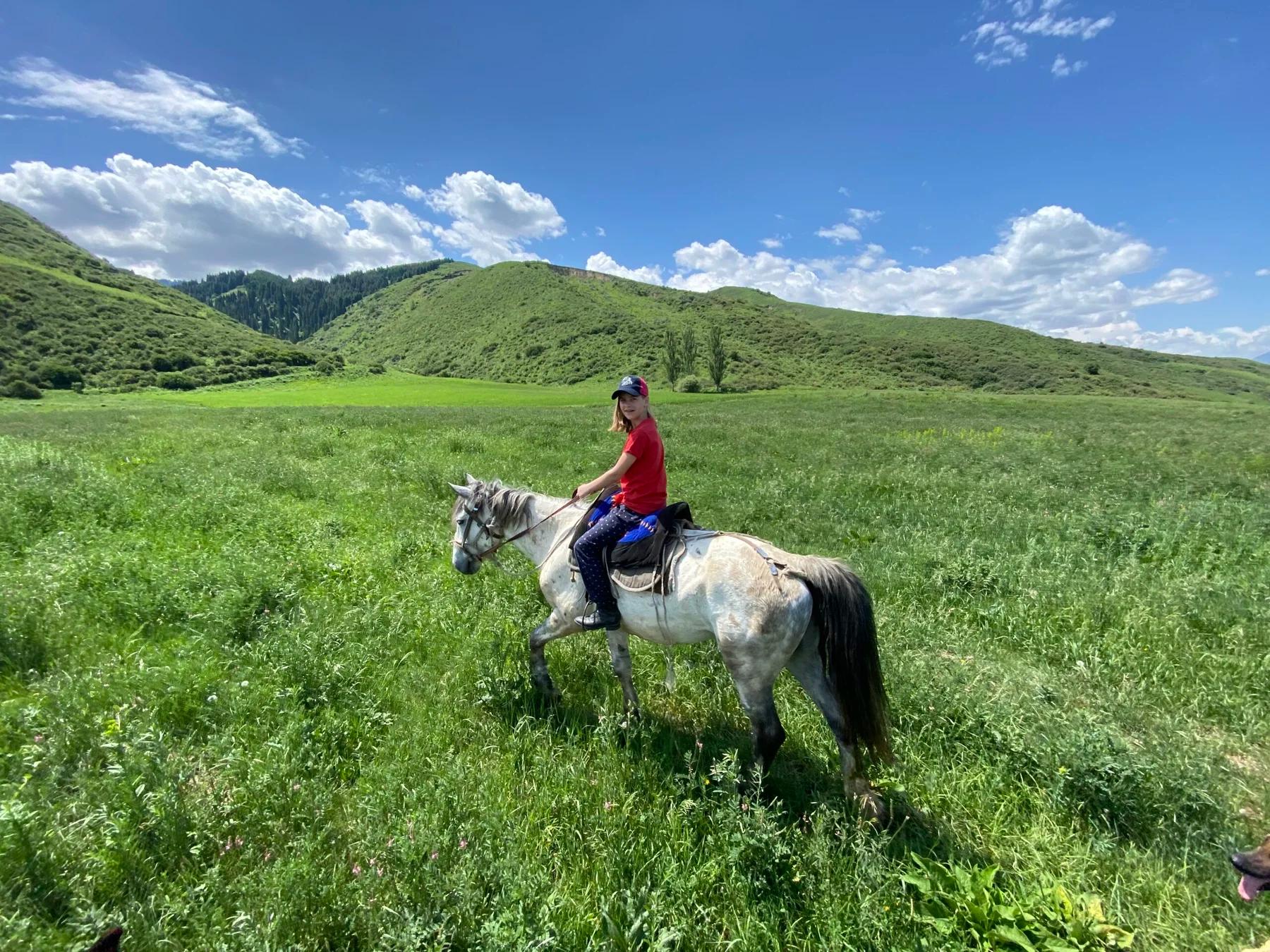
Five activities to do around Bishkek
Ala Archa on foot, horse riding in Chunkurchak or Chon Kemin, a cultural walk through the capital, paragliding above the city and rafting on the Chu river: five ways to fill a day, or a day trip, from Bishkek.
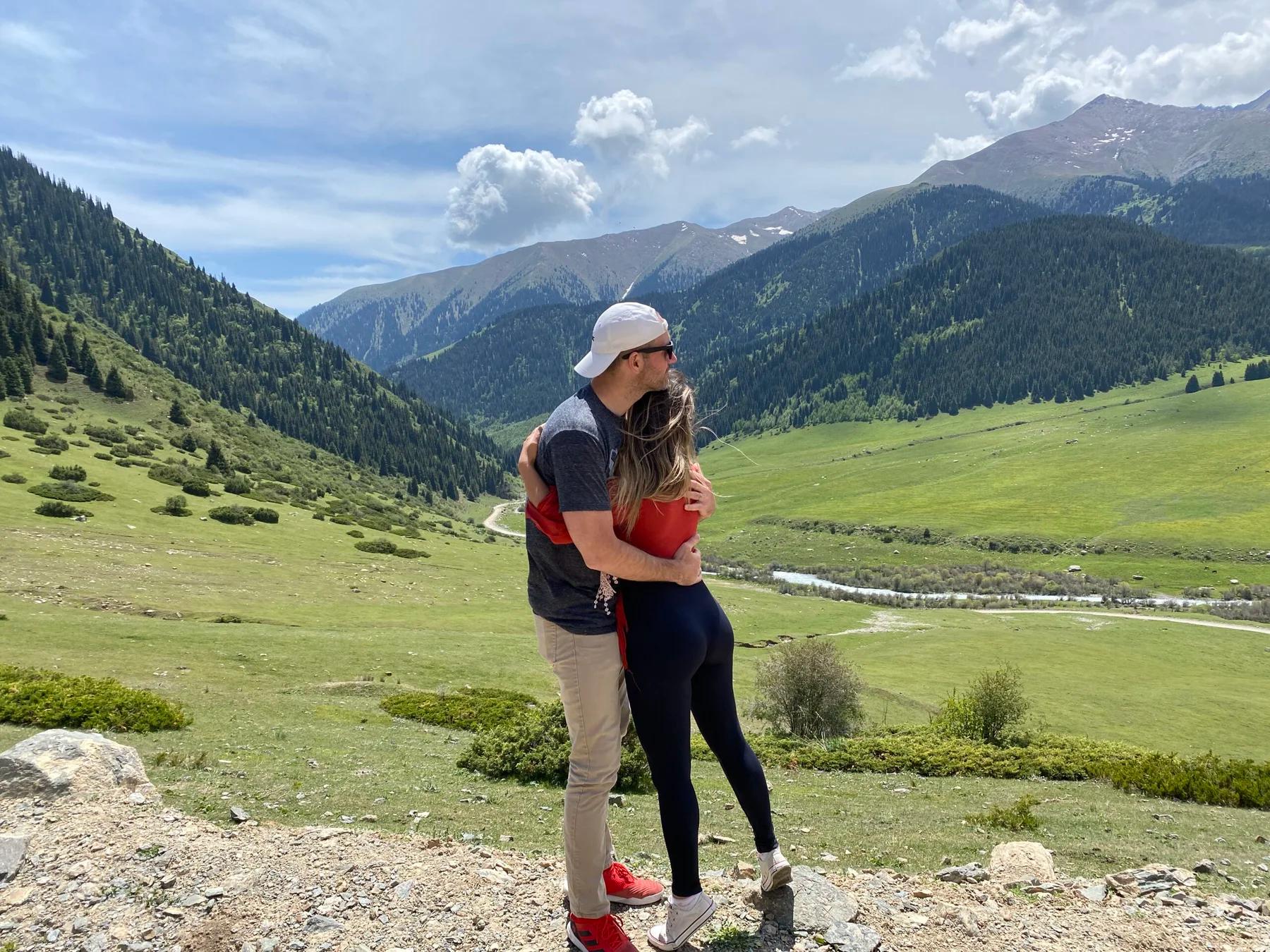
Issyk Kul in pictures
A photo album of Kyrgyzstan's best-known lake, following a route around it: Cholpon Ata and the northern shore, Grigoriev gorge, Karakol, Jeti Oguz and Kok Jayik, Skazka canyon and the southern shore, and the Chon Kemin valley on the way back.

The Silk Road beyond monuments
Why markets, workshops and ordinary streets matter as much as the famous tiled facades.